
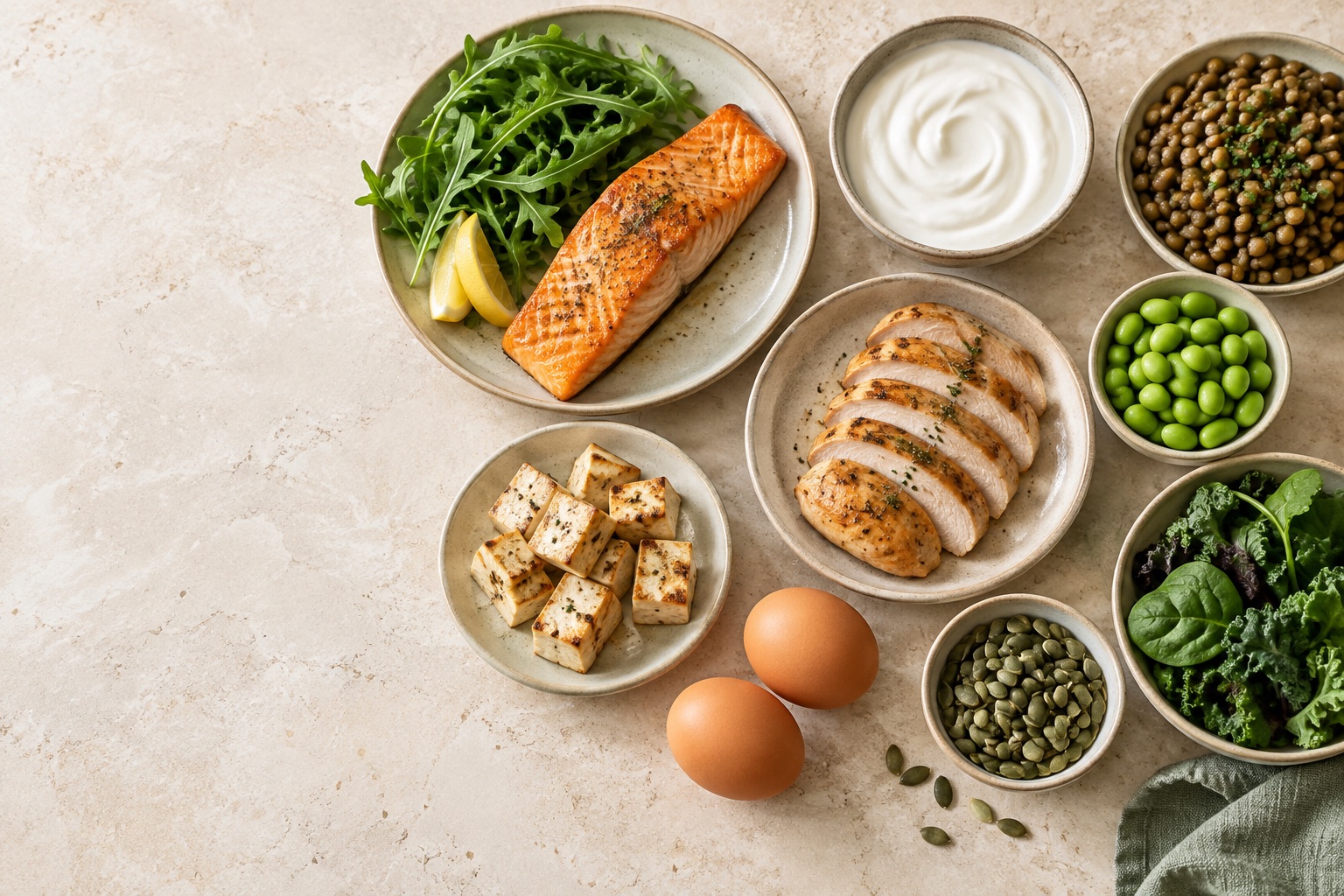
Protein needs are personal, but they do not have to be mysterious. Your body size, age, activity, health, and goals all matter. Still, there are useful starting points that can make meals easier to build.
The most important idea is simple: focus on your overall daily intake, then spread protein across the day in amounts that feel realistic. You do not need a perfect number at every meal to benefit.
Start with 20–30 grams at meals.
For many adult women, a practical starting target is 20–30 grams of protein at each main meal and 10–20 grams at a snack. Larger bodies, older adults, athletes, pregnant or breastfeeding individuals, and anyone recovering from illness or injury may need a different amount.
Why protein matters
Protein is not just for athletes. It supplies amino acids that your body uses every day to maintain and repair tissues and to make enzymes, transport proteins, antibodies, and many hormones.
- Maintains lean muscle. Protein supports muscle repair and helps preserve lean mass through aging, changes in activity, and periods of weight loss.
- Makes meals more satisfying. Including protein can help a meal keep you full longer and may make grazing less tempting.
- Supports recovery. Your body needs amino acids to repair tissues after exercise, illness, and the normal wear of daily life.
- Helps build a steadier plate. Pairing protein with fiber-rich carbohydrates and healthy fat creates a more balanced, satisfying meal.
- Supports healthy aging. Protein needs and the importance of resistance training become especially relevant as we get older.
How to estimate your daily protein target
The adult Recommended Dietary Allowance is 0.8 grams per kilogram of body weight per day. Think of that as a baseline designed to cover the needs of most healthy adults, not a personalized finish line for every goal.
Example: 150 lb ÷ 2.2 × 0.8 = about 55 g/dayMany active adults benefit from more than this baseline. Sports-nutrition guidance commonly places exercising adults around 1.4–2.0 grams per kilogram per day, depending on training and goals. That is a wide range for a reason. More is not automatically better, and your ideal target should fit your body and medical history.
Does protein timing matter?
Your daily total matters most. Spreading protein across breakfast, lunch, dinner, and an optional snack can make that total easier to reach and gives your body repeated opportunities to use amino acids for muscle maintenance and repair.
A simple first step is to look at breakfast. If it is currently toast, fruit, or coffee alone, adding eggs, Greek yogurt, cottage cheese, tofu, or a protein-rich smoothie can bring the day into better balance without changing every meal.
What does 20–30 grams look like?
Protein counts vary by brand, cut, and preparation, so use package labels when precision matters. These common portions are practical estimates.
| Food | Approx. protein |
|---|---|
| 4 oz cooked chicken breast | 35 g |
| 4 oz lean ground beef | 28–30 g |
| 4 oz salmon | 25 g |
| 1 cup plain Greek yogurt | 20–25 g |
| 1 cup cottage cheese | 24–28 g |
| 3 oz canned tuna | 20 g |
| 3 eggs | 18–20 g |
| 1 cup shelled edamame | 18 g |
| 1 cup cooked lentils | 18 g |
| ½ block firm tofu | 18–22 g |
Amounts are estimates and can vary. Plant proteins absolutely count; using a variety of beans, lentils, soy foods, nuts, seeds, and grains helps cover the full range of amino acids.
A Sample Day of Meals
This example lands near 100 grams, but it is not a prescription. A smaller person with a lower appetite may need less; an athlete or a larger person may need more. The best plan is the one that supports your needs and remains practical.
Common protein questions
Can my body absorb more than 30 grams at once?
Yes. Your body can digest and absorb more than 30 grams. The often-repeated “30-gram limit” confuses absorption with the amount that may maximize muscle protein synthesis in a particular meal. Extra amino acids are still used for other functions.
Do I need protein powder?
No. It is a convenience, not a requirement. Food-first meals can meet protein needs, while a powder can be useful when time, appetite, or access makes that difficult.
Can I get enough protein without meat?
Yes. Dairy, eggs, soy foods, beans, lentils, nuts, seeds, and higher-protein grains can all contribute. Plant-based eaters may need slightly larger portions and more variety.
Should everyone increase protein?
No. People with kidney disease or another condition that affects protein metabolism should follow guidance from their medical team. Pregnancy, breastfeeding, recovery, and certain medications also call for individualized advice.
Your target should fit your life.
If you want help connecting nutrition, symptoms, labs, and daily routines, a discovery call is the place to start.
Book a free discovery call →Sources and further reading
- Schoenfeld BJ, Aragon AA. How much protein can the body use in a single meal for muscle-building?
- Mamerow MM, et al. Dietary protein distribution positively influences 24-hour muscle protein synthesis.
- Jäger R, et al. International Society of Sports Nutrition position stand: protein and exercise.
- Layman DK. Defining meal requirements for protein to optimize metabolic roles of amino acids.
Educational note: This article provides general nutrition education and is not medical advice, diagnosis, or treatment. Individual needs vary. Speak with a registered dietitian or qualified healthcare professional for recommendations based on your health history.